Choose your package
Select an option to see its live dates and timings.
Highlights
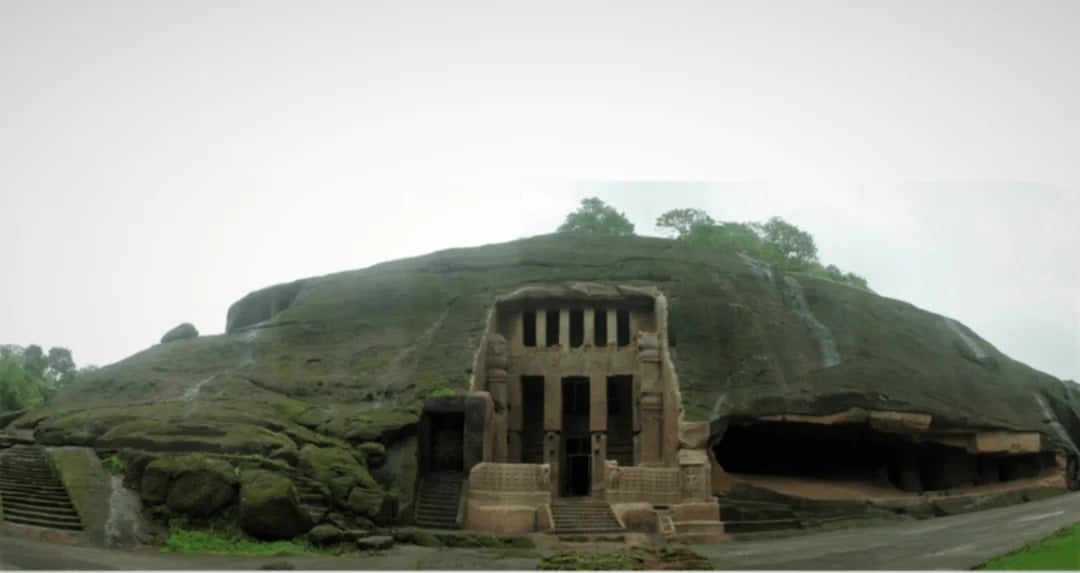
- The Kanheri Group of Caves, located in the Sanjay Gandhi National Park, Mumbai, Maharashtra, is a significant Buddhist site constructed from the 2nd century BCE to the 10th century CE.
- It is one of India's largest and oldest cave complexes, with 110 different excavations carved out of basaltic rock, used by Buddhist monks for living, meditation, and education.
- The site includes various structures such as chaitya grihas (prayer halls), viharas (monasteries), water cisterns, a stupa burial gallery, and a system for rainwater storage.
- The caves reflect two distinct phases of Buddhism: the Hinayana phase (2nd century BC to 1st century AD), characterized by aniconic worship of Buddha, and the Mahayana phase (5th to 7th century AD), marked by the idol worship of Buddha.
- The Kanheri Caves are of significant historical importance, serving as a major center of Buddhist learning and reflecting the rich cultural and architectural heritage of the region.
Your Experience
The Kanheri Group of Caves is a renowned Buddhist site located in the Sanjay Gandhi National Park, in the western suburbs of Mumbai, Maharashtra. The caves at the site are believed to have been built from 2nd century BCE to 10th century CE. They were used by Buddhist monks as living quarters, meditation halls, and educational centers.
The site is one of the largest and oldest cave complexes in India, comprising of 110 different excavations. The caves are carved out of the basaltic rock and spread over a vast area consisting of chaitya grihas (prayer halls) and viharas (monasteries) along with numerous water cisterns and a stupa burial gallery. Epigraphical evidence has also been found of an old dam and a system to trap and store rainwater at the site.
The caves majorly belong to the Hinayana phase (the earliest phase of Buddhism dating back to 2nd century BC to the 1st century AD where Buddha was worshipped in an aniconic form) but it has examples of the Mahayana (phase dates back to the 5th to 7th century AD where Buddha was worshipped in an idol form) stylistic architecture as well. Few paintings, although in extremely poor condition, of the Vajrayana order can also be found at the site.
In addition to their architectural and artistic significance, the Kanheri Caves are also of great historical importance. They were a major center of Buddhist learning and a testament to the rich cultural and architectural heritage of the region.
Inclusions
- Admission ticket
This product offers multiple ticket options. Some items above (like transfers or fast-track access) may only apply to specific options — confirm what's included when you select yours.
Cancellation Policy
These tickets can't be rescheduled or cancelled.